The Tools of Expression
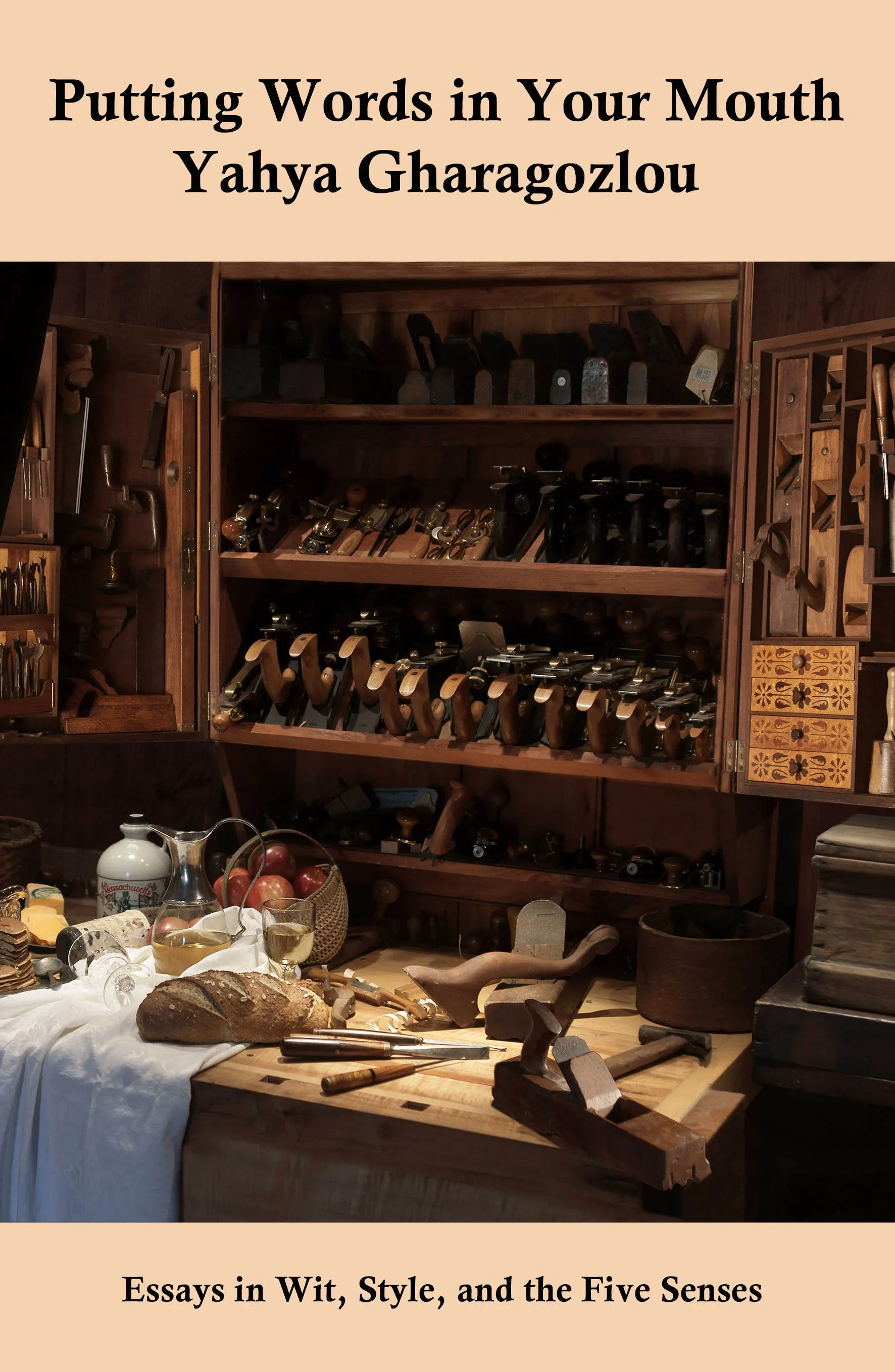
Putting Words in Your Mouth
A witty, learned guide to style, quotation, and attention
An experiment in reading that uncovers how writers spend, shape, and withhold emotion.
Putting Words in Your Mouth is a collection of linked essays that treats quotation not as ornament but as a method of thinking. Drawing on thousands of carefully gathered passages across literature, philosophy, and history, the book explores how sentences carry meaning—how wit lands, how aphorisms survive, how description sharpens perception, and how language engages the senses. It moves from the traffic of borrowed insight to the craft of omission, precision, and metaphor, arguing that writing is less invention than arrangement: selecting, testing, and positioning words until they reveal more than they state. By combining literary analysis with a reader’s obsessive practice of collecting and classifying quotations, the book becomes both a field guide and a demonstration of how style emerges from attention, judgment, and the disciplined pleasure of reading.
For Agents & Publishers
Synopsis of Putting Words in Your Mouth
PUTTING WORDS IN YOUR MOUTH: A Field Guide to Wit, Style, and the Five Senses is a collection of linked literary essays that uses quotation not as decoration but as a way of thinking. Drawing on writers across centuries, the book asks what sentences can teach: how wit works, how style sharpens judgment, how metaphor and description earn their force, how memory turns lyrical or sentimental, and how writers can learn from other writers without lapsing into cliché or secondhand thought.
It begins with a simple premise: quotations get treated as badges of learning or as borrowed prestige. These essays argue instead that quotation can be a tool of pressure, discovery, and craft. We can test a sentence for truth, vanity, precision, tone, and usefulness. What survives that testing becomes not mere citation but living language: something a reader or writer can use. Running through the book is one of its author’s private wishes: that every sentence which makes a reader pause should add a few seconds to the writer’s life, a fanciful way of imagining attention as the smallest coin of literary survival. By that measure, great writers live longest because they go on earning those moments of pause, recognition, and thought.
The essays fall into two sections. The first explores the life of ideas in compressed form, moving through subjects such as aphorism, wit, snobbery, art, beauty, women, memory, reality, and death. It asks which formulations merely sound intelligent and which survive scrutiny. Some essays separate durable insight from cleverness that collapses under pressure; others examine humor, putdowns, and snobbery as forms of social style and verbal power; still others turn to art, beauty, memory, and mortality, asking where writers achieve clarity and where they lapse into sentimentality, vagueness, or inflated seriousness.
The second section turns from ideas to the making of the sentence itself: figures of speech, understatement, hyperbole, metaphor, the five senses, description, character, realism, and voice. These essays ask practical questions: how a metaphor earns its place rather than merely decorating a line; how writers render smell, touch, and taste without deadening the prose; how description creates atmosphere and motion rather than halting them. The method is not a workshop prescription but a demonstration that pays close attention to powerful examples of how accomplished writers solve problems on the page.
What unifies the book is less its subject than its sensibility. Written in an amused, skeptical, argumentative voice, it places its judgments in conversation with the experiences of great writers. Their sentences do not replace the book’s thinking; they test it and give the reader confidence from a long tradition of serious writing.
More than a defense of quotation, PUTTING WORDS IN YOUR MOUTH is a defense of reading as an artistic practice. It argues that style is not only a matter of talent but of trained perception: hearing tone, distrusting easy profundity, recognizing false grandeur, and learning from those sentences that continue to live after their moment.
Writing by the Numbers
Selected passages exploring wit, quotation, and the craft of thinking in sentences.
Excerpt I — On Quotation and Pretension
All quotation books carry a faint whiff of pretension. Collectors of coins, butterflies, stamps–or even sentences–silently plead, acknowledge my sophistication. The dictionary defines pretentious as attempting to impress by feigning greater importance, talent, or culture than one possesses. Fowler warns, “Pretentious quotations bear the surest road to tedium.” Clive James wrote of his editor: “If I even mentioned Montaigne, let alone quoted him, it would go into the clippings file as prima facie evidence of pretension.”
Yet the pleasure of a bon mot easily outshines the shadow of pretension. Impressing above your station is straightforward: sprinkle quotations from a few hundred books. Since no two readers share identical reading lists, it suggests broad erudition. Toss in some Latin, lavish the footnotes, and you’re set. Perhaps I should have named this book A Florilegia of Apophthegmata or the softer, alliterative Florilegium with Flair to complete the effect.
I’ve long enjoyed flipping through quotation books in bookstores, though by the fourth entry, I'm inevitably overwhelmed and have forgotten the first. I put them back, convinced that their ideal location is beside the guest bathroom roll, no disrespect intended. It's simply life's one reliably peaceful moment. I don’t intend to add another volume of quotations. I want to employ an army of intelligence, call them the cherries I have picked, to bolster my beliefs and place my confirmation bias beyond doubt.
Excerpt II — On Aphorisms and Insight
Insight is experience distilled into shorthand: a hack, a maxim, a rule of thumb. A crowded terrain: sayings, proverbs, aphorisms, adages, all chasing the same kernel of truth in as few syllables as possible. I use them interchangeably. What unites them isn’t just brevity, but ambition: they aim to codify a sliver of the human condition. That’s brevity’s burden.
Every aphorism struggles to strike a balance between reach and granularity. Broad claims aren’t testable; narrow ones lack gravity. I love the balance of Jacobson’s “You can’t have belief without intolerance.” You could write a math equation around it. Grimaldi’s “Every conscience has an off switch somewhere” gave me a digital equivalent to my analog phobia for the invisible slippery slopes in all moral questions, especially in money matters.
When mining for insights, do quotations have to be in context? The answer is a definite no. We are not reporting the news. I cut text to make the highlight stand alone, more independent, and shorter. Out-of-context works better. Context is overrated. Act as gem-cutters, carving clarity from the clutter. In isolation, meaning multiplies. Out-of-context quotes, when trimmed until they gleam, don’t falsify; they intensify.
Excerpt III — On Wit and Craft
Constructing witty sentences resembles card tricks. You distract, then reveal. If the reader spots the card up your sleeve, the trick and the charm vanish. Here’s a light, three-part witticism: “People talk too much. Humans aren’t descended from monkeys. They come from parrots.” It's likable but doesn’t offer a punch. “‘Tweeting is an art form,’ I told her. ‘Like sculpture, or honking the national anthem under your armpit.’” “sculpture” takes you down the wrong track.
The longer the writer can stretch the aperçu, the louder the applause. But there’s a line. You make the reader work too hard, and they miss the payoff. In a card trick, the audience expects a reveal. In prose, the reader might stroll past the setup and never see the snap. “‘Vote for you!’ growled a surly elector in his constituency. ‘I’d sooner vote for the devil!’ ‘But in case your friend should not stand…?’” Always disparate, until “friend” and “devil” click, and you feel they’ve always belonged together.
The Italian philosophy of sprezzatura governs wit. It’s the art of grace masquerading as ease. Wit must feel tossed off, not wheezed into place. Beerbohm, writing on caricatures, a form of wit, offers the final rule: “Nothing so ruthlessly chokes laughter as the suspicion of labor.”ish and exact. A writer may be sparse and slack. The true distinction is not quantity but governance.